Advancing Women's Health Equity at Shalamar
Introduction
Women constitute the majority of patients treated at Shalamar Hospital, and their health needs have shaped the institution’s clinical priorities for over four decades. Between 2017 and 2022 alone, Shalamar Hospital provided care to more than 1.4 million female patients, reflecting both the scale of demand and the trust the surrounding community places in the institution. This document summarizes what Shalamar Institute of Health Sciences (SIHS) has built and is currently building to advance women’s health equity, organized around three pillars: treatment infrastructure, patient education, and research.
Treatment: Building Dedicated Infrastructure for Women
Shalamar has moved from offering women’s services within general departments toward a dedicated, integrated model of care purpose-built around women’s needs.
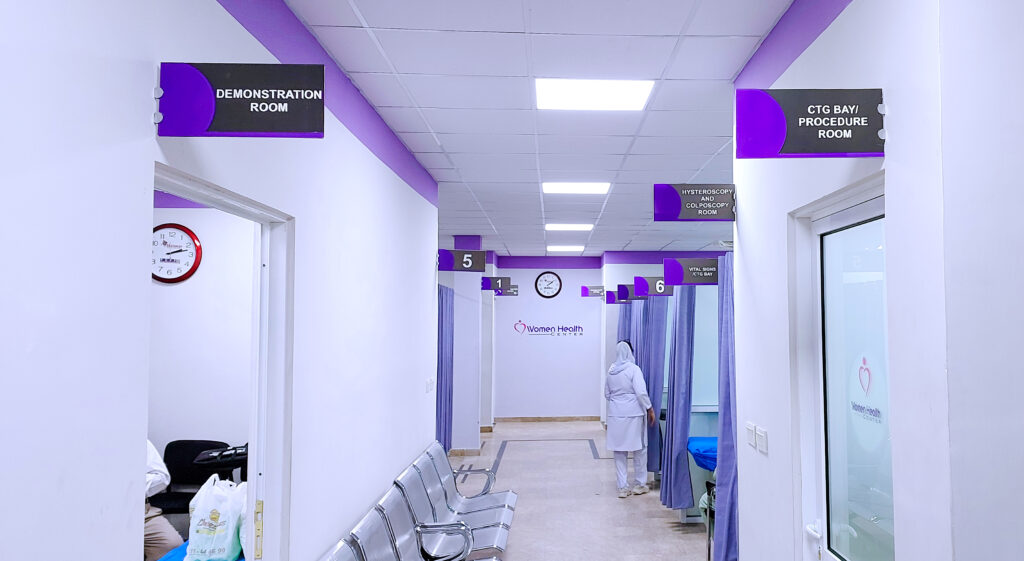
Shalamar Women's Health Center
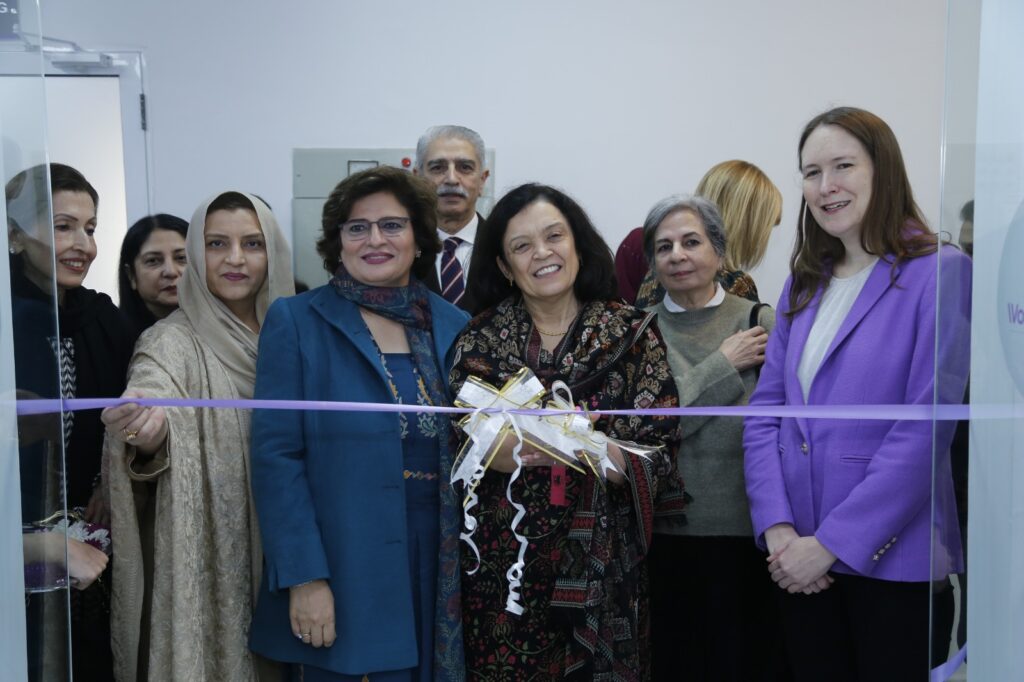
The Women’s Health Center consolidates gynecology, obstetrics, breast health, osteoporosis, and rheumatology services into a single coordinated facility. It was formally inaugurated with the participation of the American Consul General to Lahore and the President of the Royal College of Obstetricians and Gynaecologists (London), signaling both the clinical seriousness and the international visibility of the initiative. The center was developed in structured phases, beginning with a preliminary institutional assessment led by a Johns Hopkins Medicine International (JHI) team, followed by consultation on planning, monitoring, and guiding its establishment.
- Component clinics: Breast Centre, Osteoporosis Clinic, Integrated Mother and Child Health OPD, Breast Imaging Clinic, Rheumatology Clinic.
- Model of care: a single, female-centric facility designed for privacy, comfort, and continuity, with coordination across departments through shared electronic medical records, cross-referral, and structured follow-up.
- International partnership: developed in collaboration with Johns Hopkins Medicine International, including hosted observerships at Johns Hopkins for Shalamar clinicians to transfer clinical, administrative, and operational knowledge.
Shalamar Breast Center
The Breast Center is the flagship clinic of the Women’s Health Center and Shalamar’s most developed example of a one-stop model for a single disease area. It was inaugurated by the U.S. Consul General to Lahore to coincide with Breast Cancer Awareness Month, underlining the institution’s intent to pair clinical service delivery with public awareness.
- Services under one roof: clinical breast examination, diagnostic mammography and ultrasound, image-guided biopsy, oncoplastic and reconstructive breast surgery (including lumpectomy, mastectomy, and implant-based or autologous reconstruction), and multidisciplinary coordination with radiology, pathology, medical oncology, and radiation oncology.
- Volume and reach: the clinic screens and evaluates thousands of women monthly, with an emphasis on non-invasive assessment to reduce patient discomfort and delay.
- Clinical leadership: the center was established and is led by Dr. Sadaf Ishaque, Assistant Professor of Breast and General Surgery, who has also driven the clinic’s role in community breast-cancer awareness.
Obstetrics and Gynaecology
The Department of Obstetrics and Gynaecology handles the full spectrum of reproductive health care, from adolescence through menopause. It manages deliveries including high-risk pregnancies, and runs dedicated sub-clinics for infertility, urogynaecology, and gynaecologic oncology.
Broader Access Infrastructure
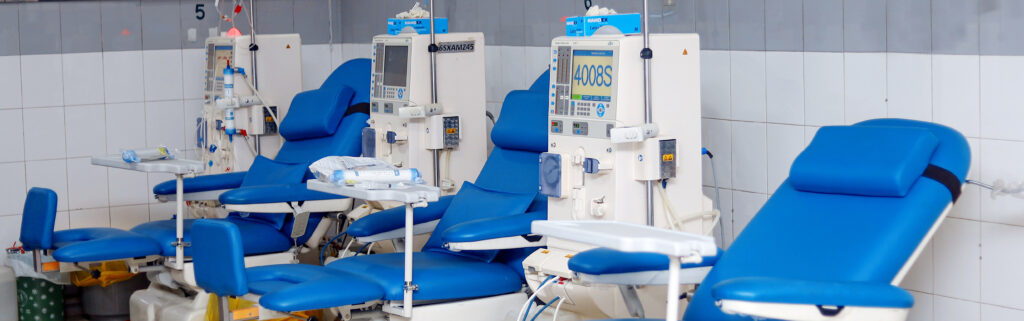
Women’s access to treatment at Shalamar is also supported by hospital-wide services relevant to female patients: a 24/7 ambulance and emergency service, a dedicated radiology suite (mammography, ultrasound, Doppler, CT, and MRI), an accredited pathology laboratory, and financial-assistance pathways for patients unable to pay in full, which the hospital has historically extended through services such as its dialysis and diagnostic programs.
Patient Education: How Shalamar Educates Women
Educating women patients at Shalamar happens at three levels: within the clinical encounter, through structured awareness programs, and through the design of the care environment itself.
Counselling Within the Care Pathway
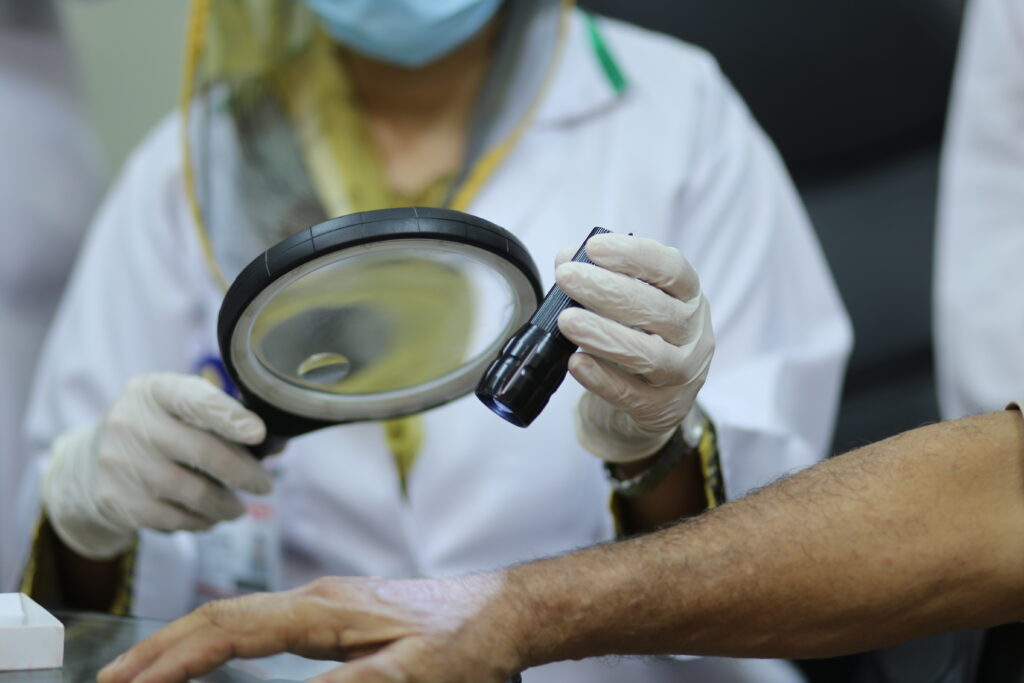
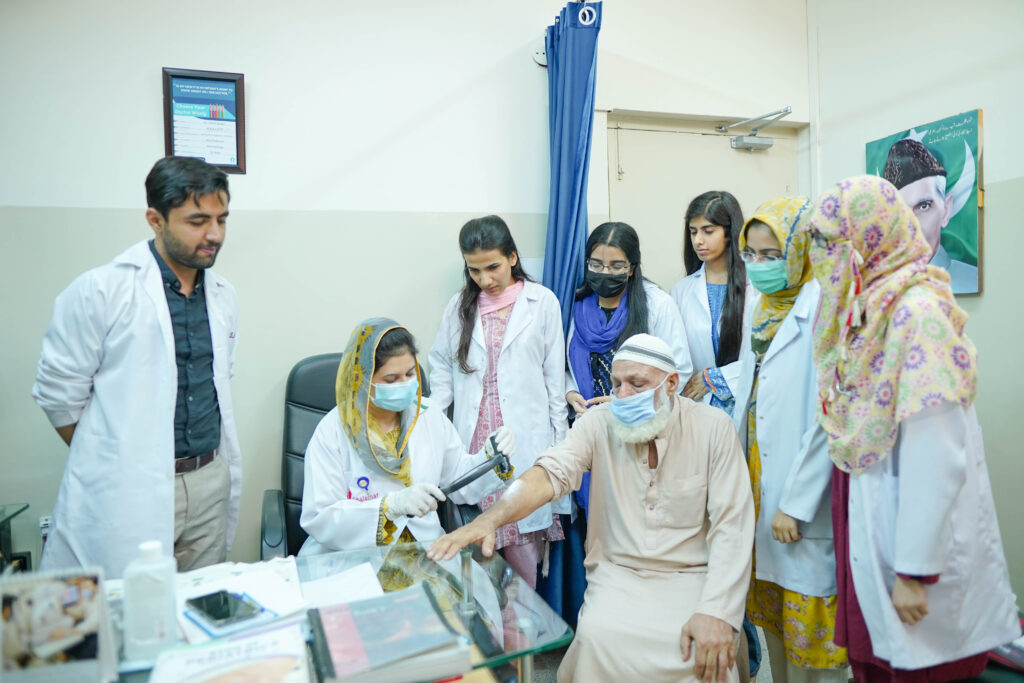
- Breast health navigators and nurses at the Breast Center guide patients through screening results, diagnosis, and treatment options, ensuring women understand each step before consenting to intervention.
- Multidisciplinary case discussion (surgery, oncology, radiology, pathology) is translated into a single, coordinated conversation with the patient rather than fragmented explanations from separate departments.
- Confidential, one-on-one communication and counselling is built into the Women’s Health Center’s service model, recognizing that sensitive topics (breast disease, infertility, menopause) require a private and trusted setting to be understood and acted on.
Structured Awareness Programs
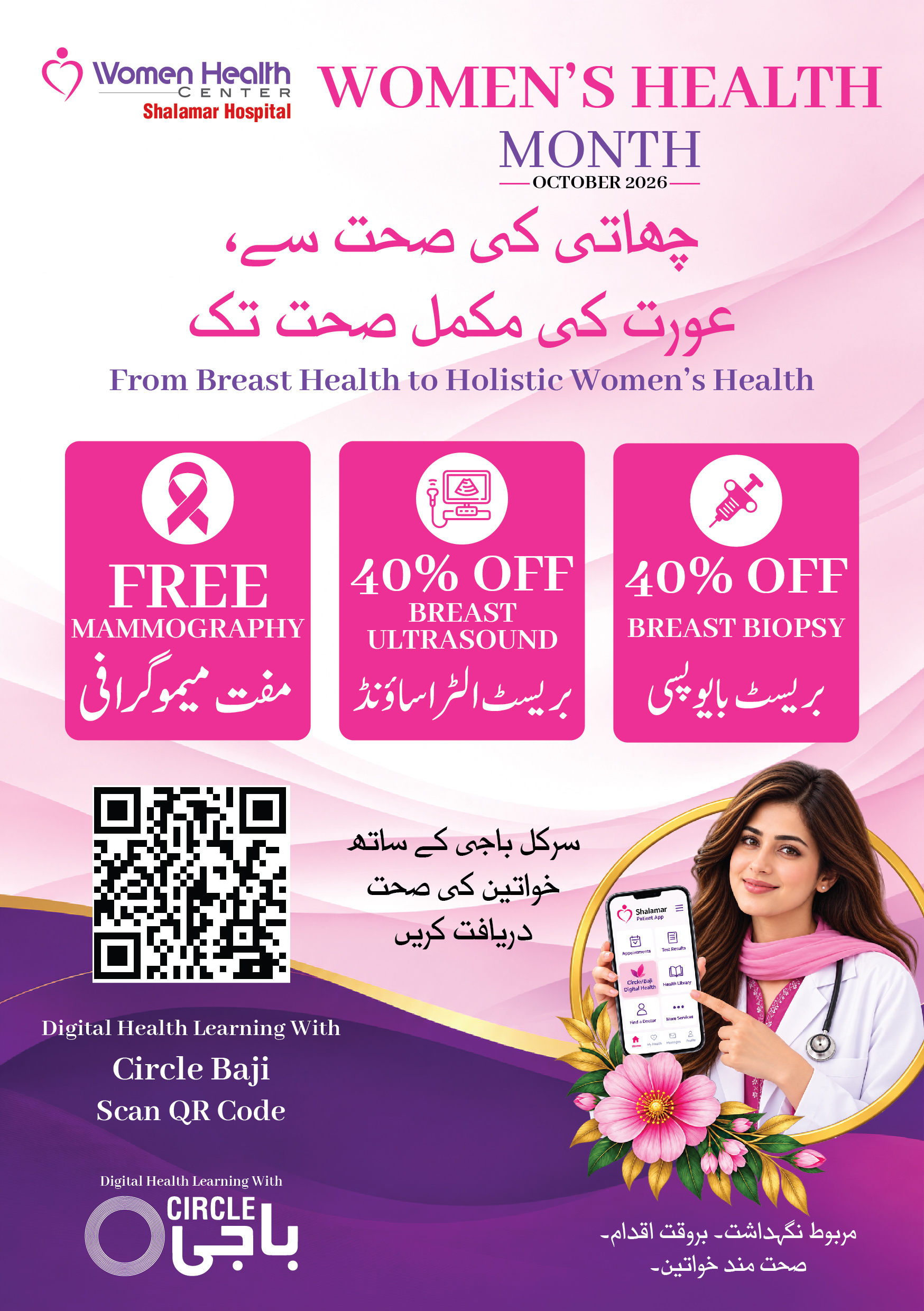
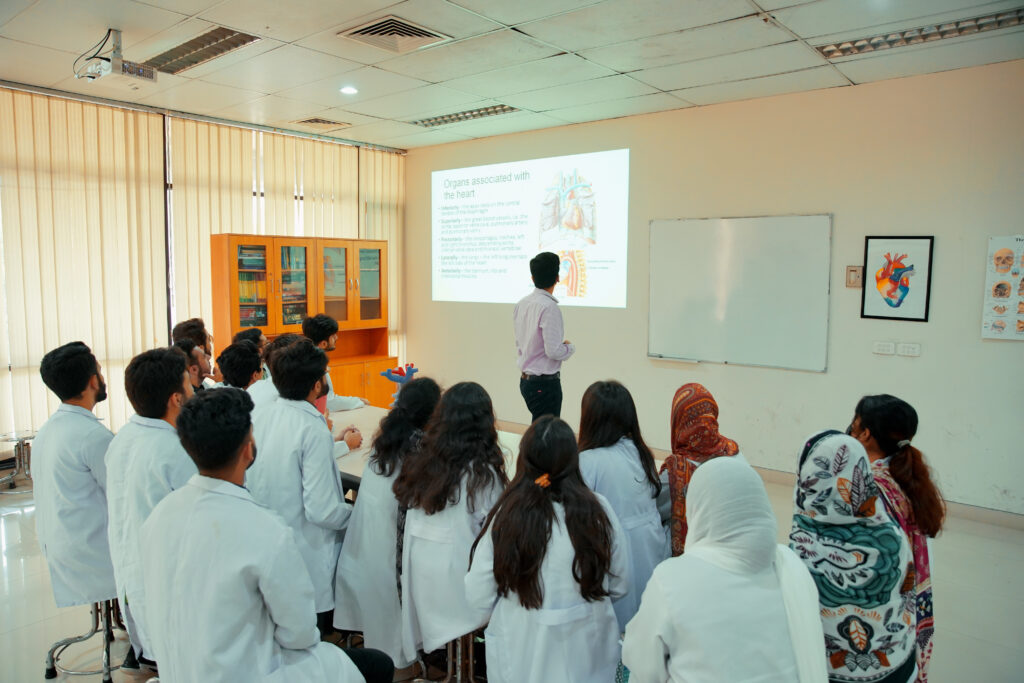
- Breast Cancer Awareness Month: the Breast Center’s inauguration was deliberately timed to this period, and the center continues community engagement on self-examination, screening intervals, and early-symptom recognition.
- Community and corporate outreach: partnerships such as the MOU with the Lahore Chamber of Commerce and Industry extend preventive health messaging and access beyond the hospital walls to employees and their families.
- Referral and screening drives: the Breast Center’s high monthly screening volume reflects active outreach to bring asymptomatic women in for early detection, not only symptomatic patients seeking treatment.
Environment as Education
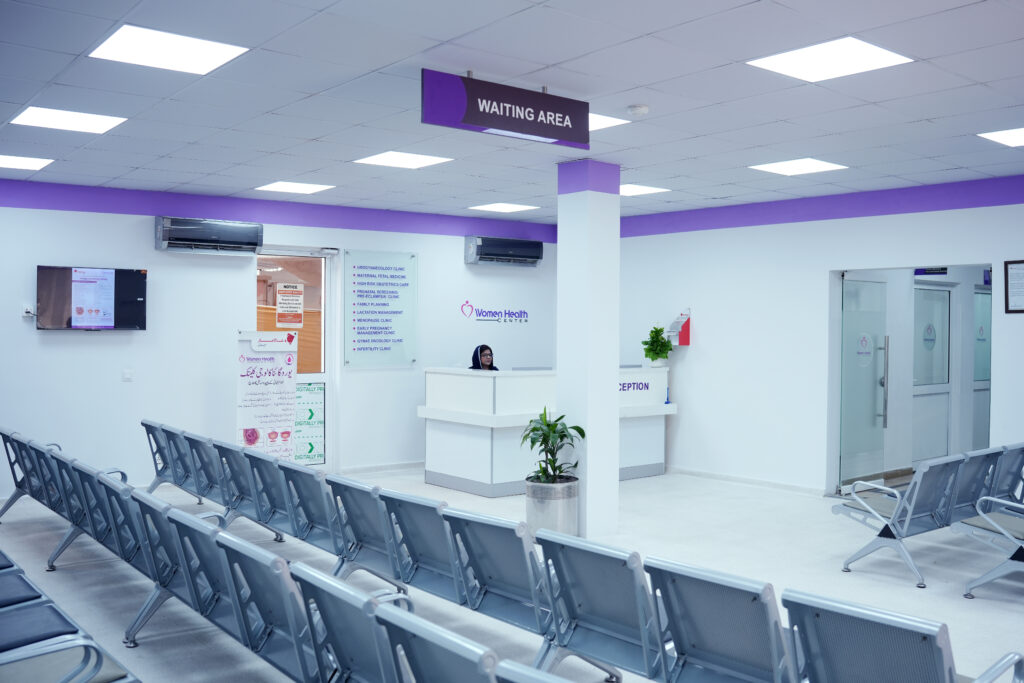
Shalamar’s female-centric design philosophy, a calm, well-appointed, and privacy-respecting physical environment, is treated as part of the education strategy, not separate from it. Women are more likely to ask questions, disclose symptoms, and return for follow-up when the setting itself signals discretion and respect. The Women’s Health Center’s one-stop layout also reduces the number of separate visits and providers a woman must navigate, which lowers the practical barrier to completing a diagnostic or treatment plan.
Research: Building the Evidence and Training Base
SIHS treats research as a core pillar of its women’s health strategy, both to generate local evidence and to train the next generation of clinicians and researchers.
Academic and International Research Partnerships
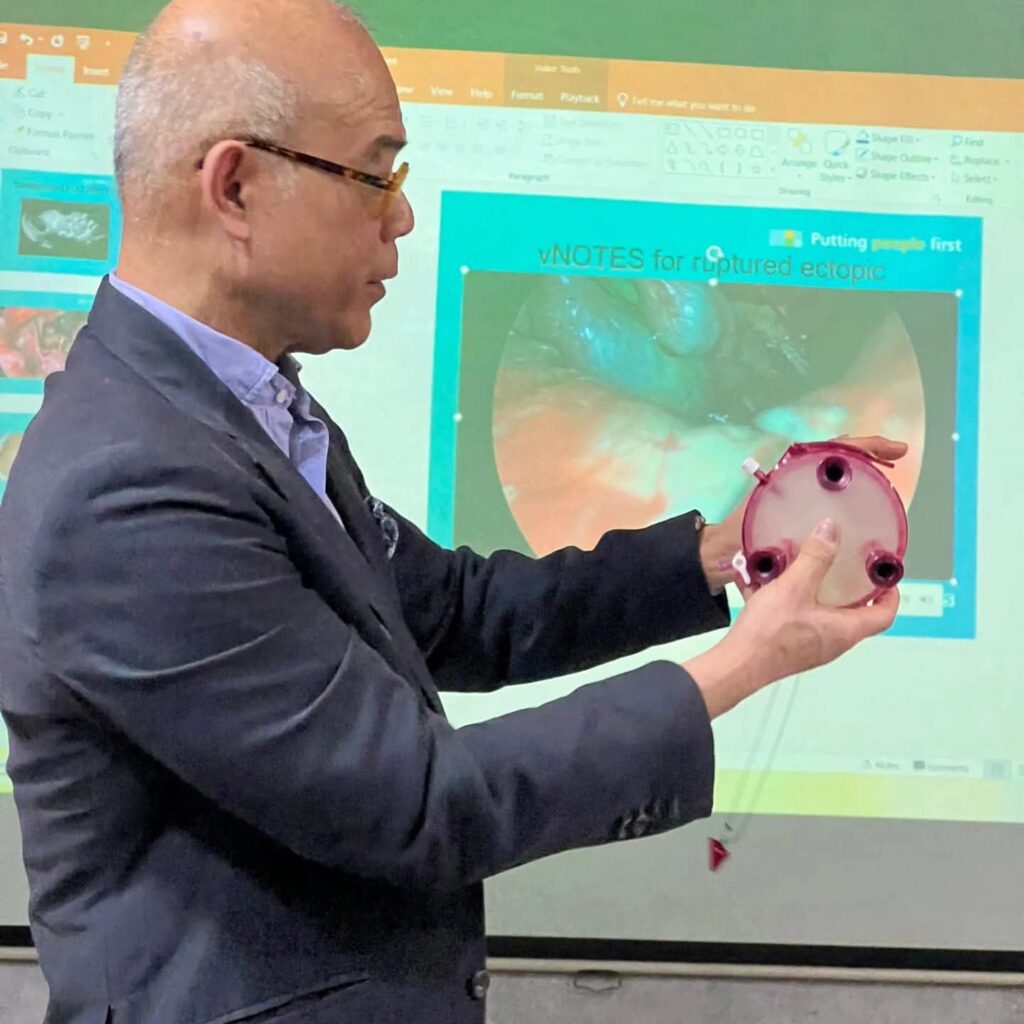
- Johns Hopkins Medicine International: beyond service design, the collaboration includes an assessment survey methodology used to identify focus areas for the Women’s Health Center, and structured observerships intended to build long-term research and clinical capacity among Shalamar staff.
- LUMS internship and research programs: an MOU with the Lahore University of Management Sciences places students directly into hospital operations and research-adjacent projects, mentored by senior Shalamar leadership, building a pipeline of future healthcare researchers and administrators.
- Faculty-led clinical research: breast surgery faculty, including Dr. Sadaf Ishaque, actively present original research at academic conferences, extending the institution’s research output beyond internal quality-improvement work.
Current PPO-led work extends this research and technology base directly into women’s health delivery, most notably the SIHS-LUMS AI-powered WhatsApp chatbot initiative, which is being developed to support diabetes and hypertension management, both conditions with major, under-addressed impact on women’s long-term health in Pakistan. These initiatives are designed to extend education and early intervention beyond the hospital’s physical footprint, using the same evidence-based, patient-centered principles established through the Women’s Health Center.
Summary: Shalamar's Women's Equity Model at a Glance
| Pillar | What Shalamar Has Done | Why It Matters for Equity |
| Treatment | Women’s Health Center; Breast Center; OB-GYN department; JHI-guided facility design | Consolidates fragmented services into accessible, one-stop, female-centric care |
| Education | Navigator-led counselling; Breast Cancer Awareness Month programming; corporate/community outreach | Builds informed consent, earlier presentation, and follow-through on treatment |
| Research | Centre of Excellence; JHI and LUMS partnerships; faculty-led breast surgery research; AI chatbot pilot for diabetes/hypertension | Generates local evidence and extends care beyond the hospital’s physical reach |
Core healthcare components foster gender equity
| Component | What it includes |
| Makes holistic care affordable at the Women’s Health Centre (WHC) | subsidized and free treatment through internal referral pathways, with discount packages that cover multiple treatments in a single care journey |
| Value line for WHC patients | Shalamar pairs maternal and reproductive care with the frequently neglected areas — breast and cervical cancer screening, women’s cardiovascular disease, bone and menopausal health, adolescent and geriatric care, and mental health |
| Protects dignity and confidentiality | Respectful-care standards ensuring privacy – female staff, privacy cabins, flexible hours, doctor patient confidential communication |
| Equity measurement – Tracks equity with women-specific data | HMIS data analysis assessment; disease prevalence, services uptake, measuring outcomes (screened, treated, cured), not just output numbers |
| Telemedicine | Extends care beyond its walls through telemedicine, bringing consultations to women unable to reach the hospital |
| Internal equitable environment | harassment policy supports female students/faculty/clinicians via a harassment-free environment |
Advocacy Components foster gender equity
| Level | What it involves |
| Individual Patient Support | Navigators advocating for specific women — understanding conditions, getting through the health journey |
| Breast cancer awareness camps in girls’ colleges | Shalamar runs breast cancer awareness and education camps in girls’ colleges, reaching women early |
| Educational podcasts for women | Shalamar regularly creates and airs podcasts on women’s health issues, preventive care, and treatment guidance |
| Communications: success stories | Ethical, consent-based patient stories that give women hope and encourage them to seek treatment |
| Trains the wider profession (CME) | Shalamar extends Continuing Medical Education on women-specific health topics to both its own and external clinicians |
| Partners on the Gates Foundation project | Shalamar has partnered with LUMS on a Bill & Melinda Gates Foundation–supported project to develop a chatbot that assists women seeking gynaecological care |
Last Five year record

Women's care volume is rising year on year
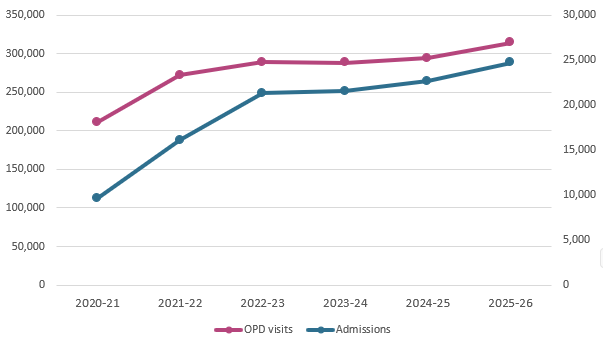
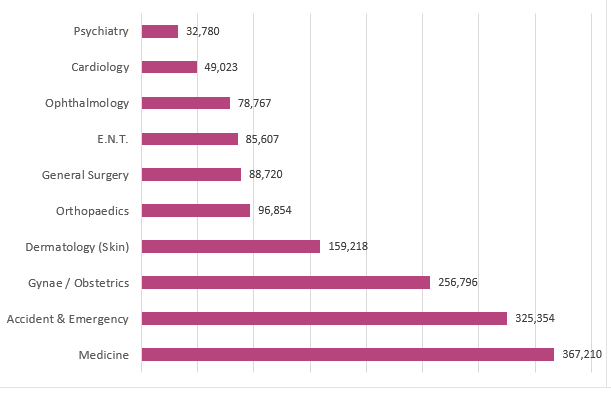
where women seek care Top 10 departments (OPD Visit 6 Years)